


/…/
—
The oceans are the largest bodies of water on Earth, covering about 71% of the planet’s surface and regulating its climate and ecosystems. Traditionally, there are five oceans: the Pacific, Atlantic, Indian, Southern, and Arctic. Each ocean has its own unique characteristics, currents, and marine life, making them essential for understanding the Earth as a blue planet.
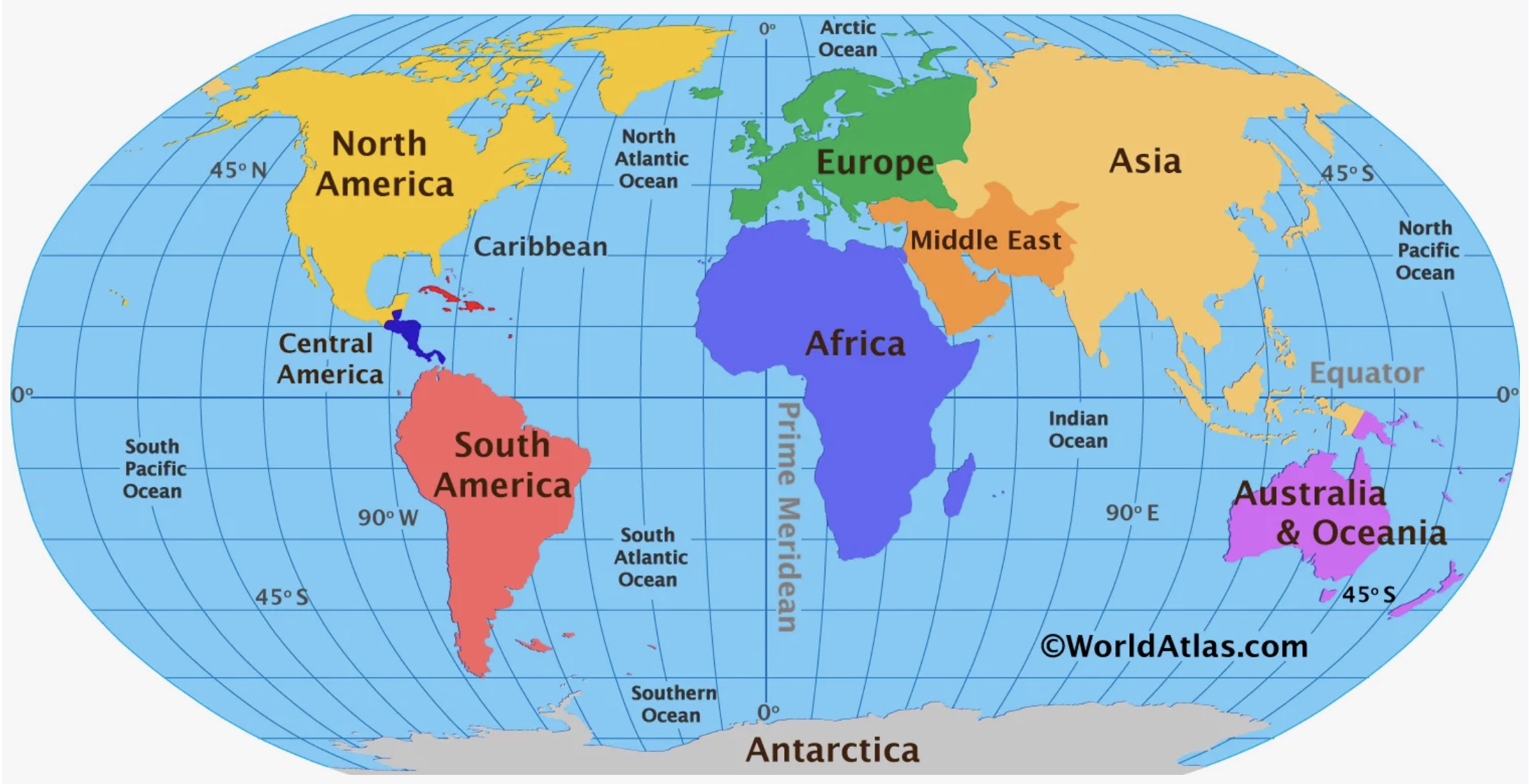
Most of the Earth is covered with water. Long ago, all this water formed very large bodies called oceans. Oceans are huge and very deep, much bigger than seas or lakes.
Today, there are five oceans on Earth. They are the Pacific Ocean, Atlantic Ocean, Indian Ocean, Arctic Ocean, and Southern Ocean.
The largest ocean is the Pacific Ocean. It is also the deepest ocean on Earth. The deepest place in the world is in the Pacific Ocean and is called the Mariana Trench Its depth is about 11,000 meters. The pressure at the bottom is over 1,000 atmospheres, which means that the force is strong enough to crush the human body instantly..
The Atlantic Ocean lies between the Americas and Europe and Africa. It separates the New World from the Old World and is very important for travel and trade.
The Indian Ocean is between Africa, Asia, and Australia. Its waters are warm, and many people have sailed across it for thousands of years.
The Pacific Ocean lies between Asia and Australia on one side and the Americas on the other side. It is so wide that crossing it can take many weeks.
The Arctic Ocean is the smallest ocean. It is very cold and lies around the North Pole, between North America, Europe, and Asia. Much of it is covered with ice.
The Southern Ocean surrounds Antarctica. Its waters are cold and stormy, and they help control the Earth’s climate.
All oceans together cover about 71% of the Earth’s surface. Because of this, Earth is often called the Blue Planet.
LISTEN TO THE TEXT

За полгода вывожу ученика начального уровня на уровень уверенного общения, свободного выражения своих мыслей. Специализируюсь на экспресс-методах обучения.